

PRS-TEK™
Virotek’s polygenic risk score (PRS) test is designed to assess inherited risk for common complex diseases. By evaluating the cumulative impact of hundreds of genetic variants per disorder, PRS-TEK™ helps identify patients who are at significantly higher risk than the average population.
Order a TestWho is PRS-TEK™ For?
PRS-TEK™ enables earlier disease prevention, tailored screening, and proactive clinical management through genomic risk stratification.

Borderline Risk Factors
Individuals with borderline clinical risk factors or ambiguous family history

Early-Onset Family History
Patients with early-onset disease in the family

Preventive Health Planning
Adults with no known history but desire for preventive health planning

Population Health Programs
Healthcare programs requiring comprehensive risk assessment
Polygenic Risk Assessment
While some inherited diseases are driven by a single high-impact mutation (monogenic risk), many common conditions arise from the combined influence of hundreds of genetic variants, each contributing a small effect. Polygenic risk scores (PRS) integrate these variants into a single genomic risk estimate — this enables a more nuanced understanding of disease predisposition beyond traditional high-risk gene testing alone.
-
Goal: Enable earlier disease prevention, tailored screening, and proactive clinical management through genomic risk stratification
-
Not Diagnostic: PRS-TEK™ offers relative risk assessment, not current disease status
-
Comprehensive: Evaluates hundreds of genetic variants per condition for accurate risk prediction

Five Analysis Categories
Comprehensive polygenic risk assessment across multiple health domains in a single test.

Cancers
Polygenic risk assessment for common cancers, enabling personalized screening strategies and early intervention planning.
Conditions Analyzed: Breast, Prostate, Ovarian, Melanoma, Colorectal, Kidney

Cardiovascular Conditions
Assessment of inherited risk for cardiovascular diseases, facilitating preventive care and lifestyle interventions.
Conditions Analyzed: Coronary artery disease (CAD), Atrial fibrillation, Stroke

Neurological & Other Disorders
Risk assessment for neurological conditions and other health risks, enabling proactive health management and preventive care planning.
Conditions Analyzed: Alzheimer's disease, Early menopause, Osteoporosis

Metabolic Disorders
Comprehensive risk evaluation for metabolic conditions, supporting personalized prevention and management strategies.
Conditions Analyzed: Type 2 Diabetes, Hypertension, High triglycerides, Hypo-HDL cholesterolemia, Polygenic hypercholesterolemia

Gastrointestinal & Autoimmune Disorders
Polygenic risk evaluation for gastrointestinal and autoimmune conditions, supporting early detection and personalized management approaches.
Conditions Analyzed: Inflammatory Bowel Disease (IBD), Celiac disease

How PRS-TEK™ Could Change Patient Management
PRS-TEK™ enables healthcare providers to make more informed decisions about patient care through personalized risk assessment.
Identify patients who may benefit from earlier or more frequent screening
Motivate lifestyle changes with quantifiable personal risk
Inform referrals to specialists or genetic counselors
Example Clinical Applications
How PRS-TEK™ results guide screening, prevention, and clinical decisions in practice.

Case 1 – Breast Cancer
Patient: 32-year-old woman, average BMI, no family history.
PRS: High PRS for Breast Cancer.
Action: Mammogram initiated 8 years earlier than guidelines.

Case 2 – Coronary Artery Disease
Patient: 45-year-old man, borderline LDL, family history of early MI.
PRS: Elevated PRS for CAD.
Action: Statin therapy started; lifestyle coaching initiated.

Case 3 – Colorectal Cancer
Patient: 60-year-old with normal screening results.
PRS: Elevated PRS for colorectal cancer.
Action: Colonoscopy scheduled 5 years earlier.

Case 4 – Colorectal + IBD
Patient: 42-year-old with personal history of inflammatory bowel disease.
PRS: High PRS for colorectal cancer.
Action: Screening colonoscopy advanced by 5 years; surveillance intensified.

Case 5 – Type 2 Diabetes
Patient: 38-year-old male, high physical activity, no major family history, normal BMI.
PRS: Elevated PRS for Type 2 Diabetes.
Action: Fasting glucose and HbA1c monitoring from age 40; lifestyle adjustments.

Case 6 – Low Breast Cancer PRS
Patient: 50-year-old woman, no family history.
PRS: Low PRS for Breast Cancer.
Action: Screening per standard guidelines; reassurance about lower risk.

Case 7 – Alzheimer's
Patient: 46-year-old man.
PRS: High risk of Alzheimer's.
Action: Early cognitive screening discussed; protective lifestyle strategies; eligibility for future prevention trials.

Case 8 – Atrial Fibrillation
Patient: 65-year-old woman, no symptoms.
PRS: High relative risk for Atrial Fibrillation.
Action: Annual ECG screening added; early detection allows timely anticoagulant consideration.
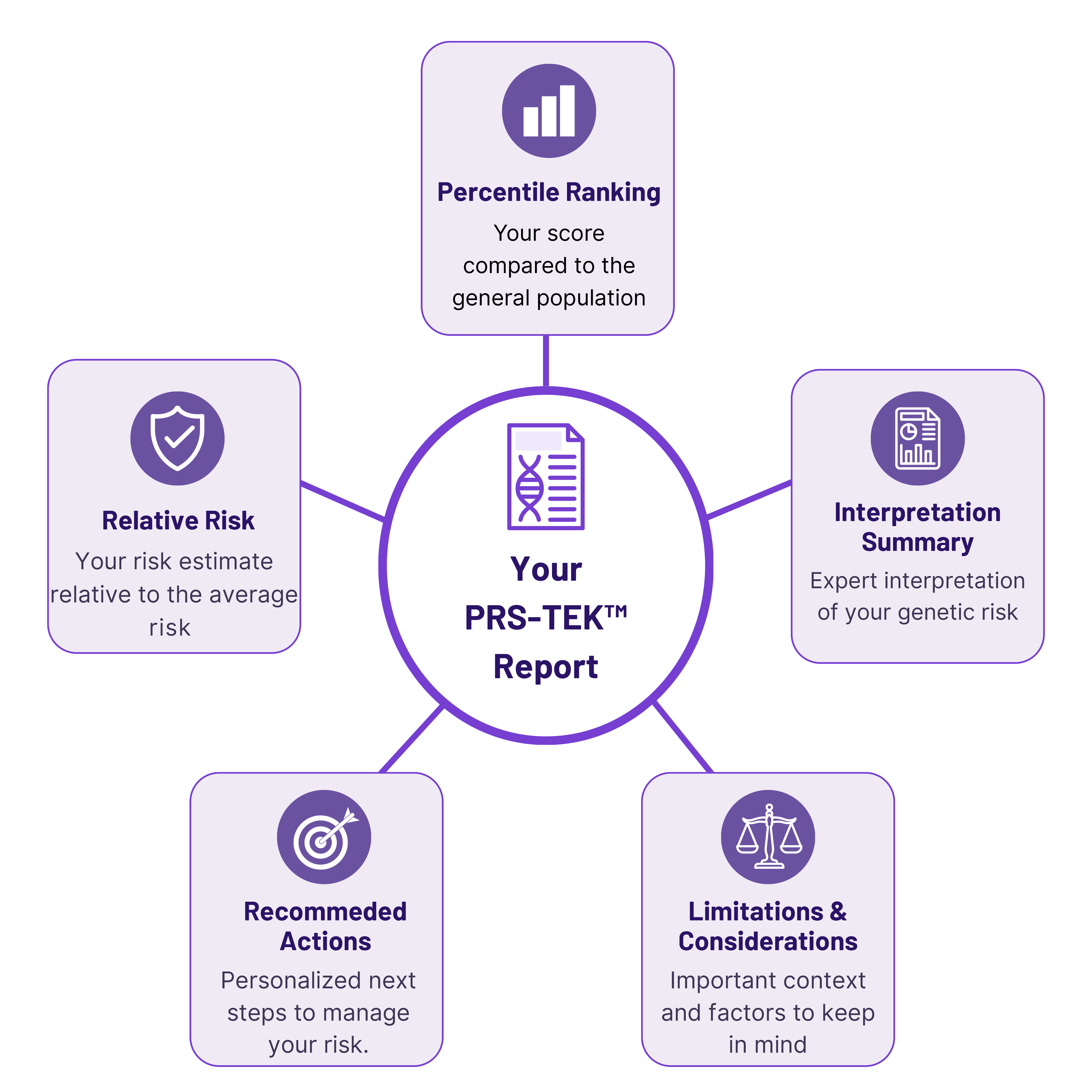
Understanding Your PRS-TEK™ Report
Each section in the PRS-TEK™ report includes comprehensive information to help healthcare providers make informed clinical decisions.
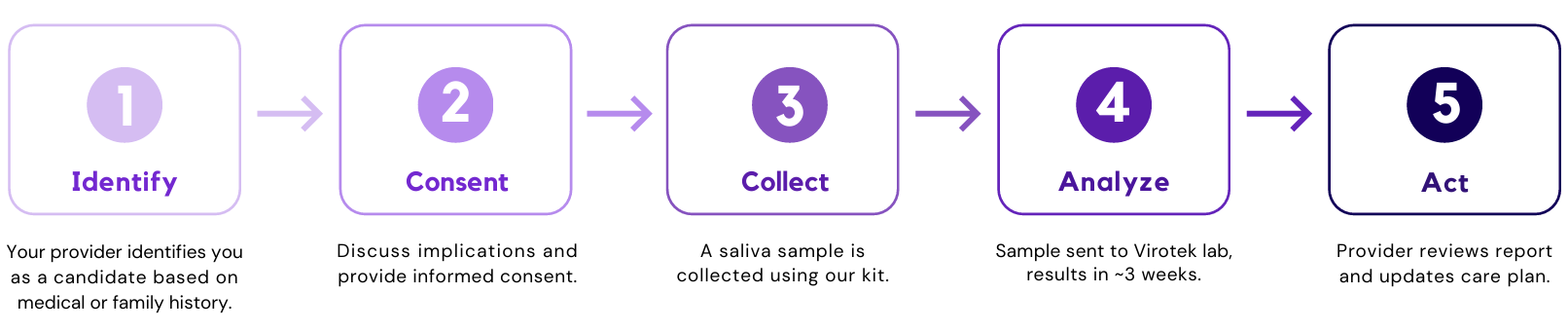
How It Works
A simple, guided process from consultation to clinically actionable reporting.
Ready to Integrate PRS-TEK™ Into Your Practice?
Contact our team to learn how our tests can enhance your clinical offerings and improve patient outcomes.
Contact Sales Request Information